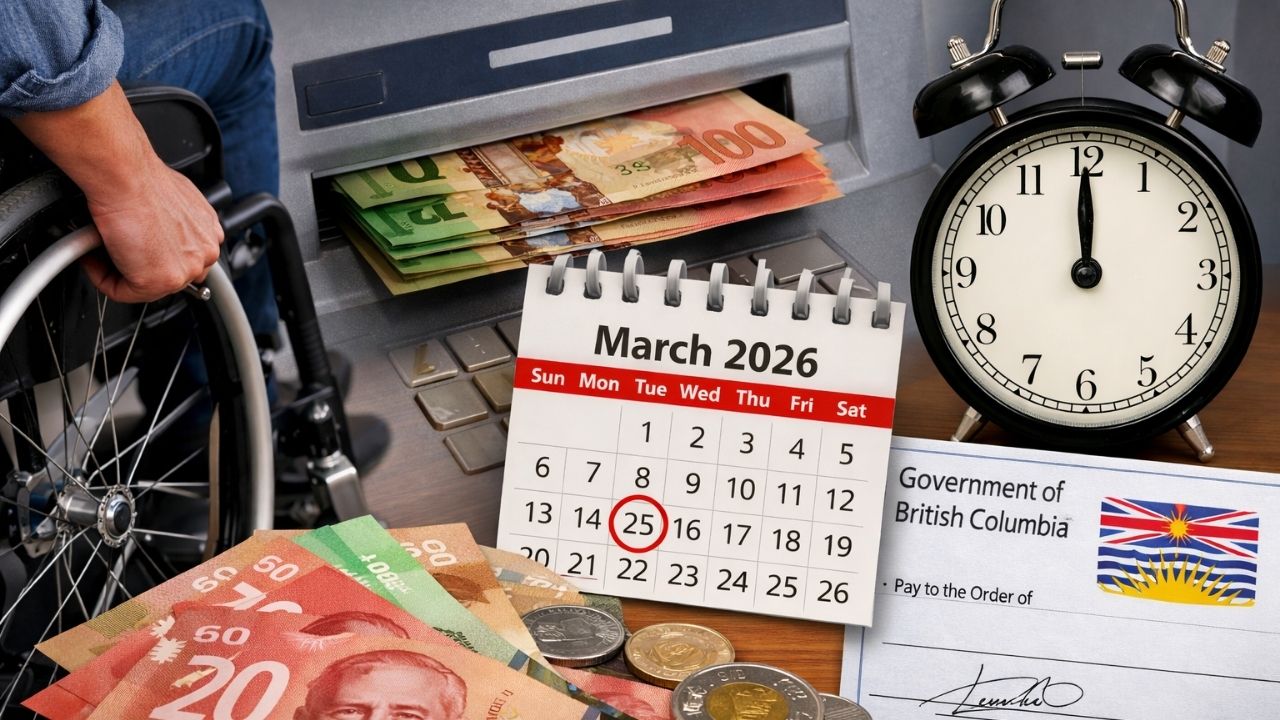
If you receive Persons with Disabilities (PWD) benefits in British Columbia, your next payment is just around the corner. The March 25, 2026 deposit will arrive soon—and it’s an important one because it covers your April expenses.
For many recipients, this monthly payment is essential for managing rent, food, and daily living. Here’s everything you need to know about the upcoming deposit, updated benefit amounts, and key changes in 2026.
March 25, 2026 Payment: Key Details
The next PWD payment will be deposited on Wednesday, March 25, 2026, and it covers the entire month of April. For those using direct deposit, funds are typically available at midnight Pacific Time. Depending on your bank, the money may appear immediately or within a few hours. If you receive a cheque, expect delivery within a few days after the payment date. However, delays can happen depending on postal service conditions.

How Much You Can Receive Each Month
PWD benefits vary depending on your household situation, but there are clear maximum amounts for 2026. A single person can receive up to about $1,483.50 per month, while couples where both partners qualify can receive over $2,400 combined. Single parents with one child may receive around $1,828.50 monthly.
These payments include support for basic needs, housing, and transportation, making them a critical source of income for many households.
What’s Included in Your PWD Payment
The monthly amount is made up of different components. There’s a support allowance for daily living expenses and a shelter allowance to help with housing costs. In addition, recipients receive a transportation supplement, which can either be a bus pass or a small cash amount. This structure allows some flexibility, especially for those who may not rely on public transit regularly.

Full 2026 Payment Schedule
PWD payments follow a predictable schedule, typically issued near the end of each month. After the March 25 deposit, upcoming payments include April 22, May 27, and continue monthly through December 16, 2026. Each payment is issued in advance, meaning the funds are meant to cover the following month’s expenses.
New Earnings Rules for 2026
One of the most important updates for 2026 is the earnings exemption. Single recipients can now earn up to $16,200 per year without any reduction in their benefits. Couples where both partners have PWD designation can earn up to $32,400 combined. This system allows recipients to work part-time or earn additional income without immediately losing support.
Important Change for Couples
A key improvement introduced in late 2025 continues into 2026. Couples where both partners qualify for PWD are no longer limited by the previous “spousal cap.” Instead, both individuals receive the equivalent of full single-person support. This change significantly increases financial support for eligible couples.

Canada Disability Benefit: Extra Support Available
PWD recipients in British Columbia may also qualify for the federal Canada Disability Benefit (CDB), which can provide up to $200 per month.
The good news is that this federal benefit does not reduce your provincial PWD payments. You can receive both amounts in full if you qualify. To be eligible, you must be approved for the Disability Tax Credit and meet income requirements.
What to Do If Your Payment Is Late
If your payment doesn’t show up on time, don’t panic right away.

First, wait until business hours, as some banks process deposits later in the morning. Next, check that your banking details are correct and up to date. If the payment still hasn’t arrived by the next business day, you can contact the Ministry or check your account through the My Self Serve portal.
Why This Payment Matters
For many recipients, PWD benefits are a lifeline that helps cover essential costs. With rising living expenses, these payments provide stability and predictability each month. The consistent schedule also helps with budgeting and planning ahead.
Combined with federal supports like the Canada Disability Benefit, recipients may have more financial support in 2026 than in previous years.